Rice and pastry3 min read
Green pastry cases can look nearly identical while holding very different fillings. Qingtuan offers a useful lesson in keeping the outside, the filling and the cultural occasion on separate lines. A small filling map makes a mixed purchase easier to share and lets the pastry’s seasonal associations enrich the meal without dictating what every version contains.
Read the guide ↗
Rice and pastry3 min read
A slice of Chongming cake can reveal its structure more clearly than a photograph of the whole cake. Treat the cut surface as a small landscape of rice body and added pieces. The exercise helps distinguish what the particular slice contains, how it is served and which questions a decorative outer surface cannot answer.
Read the guide ↗
Savory breakfast3 min read
The English word pancake can suggest a soft, sweet stack before the food arrives. Cong you bing invites a different set of questions about surface, interior and scallion aroma. A three-part texture log helps you approach the snack on its own terms and explain it to someone who has not tried that particular version.
Read the guide ↗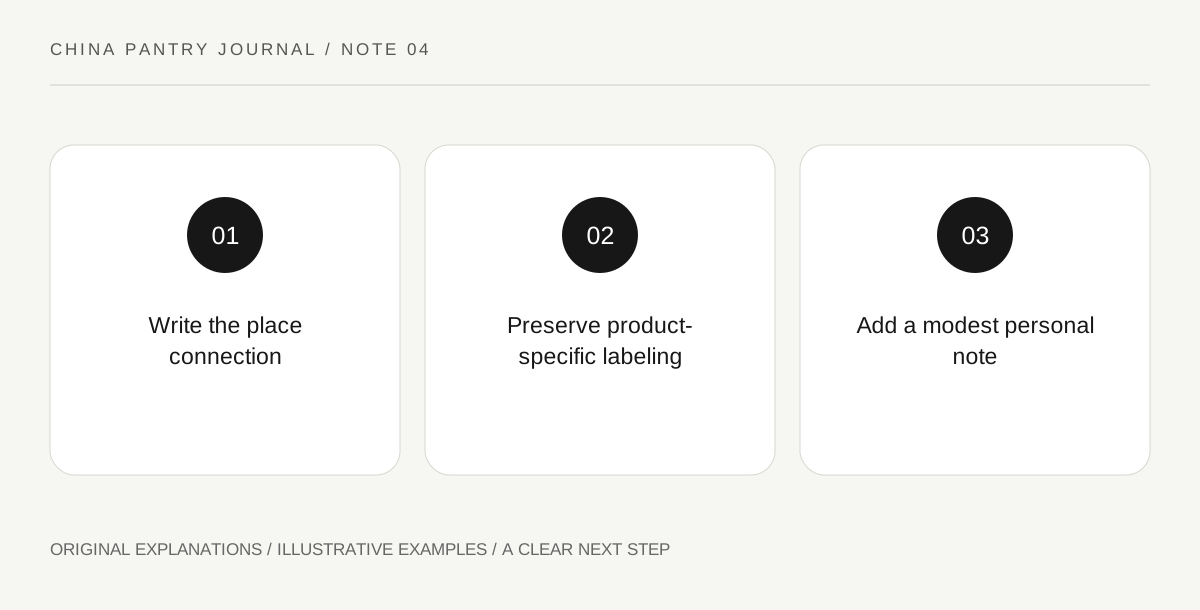
Rice and pastry3 min read
A small edible souvenir can carry a place story without requiring a grand health claim or a legend about its origin. Pear-syrup candy offers a useful gift-writing exercise: distinguish the tradition named in a cultural source from the exact packaged product you are holding, then give the recipient information they can actually use.
Read the guide ↗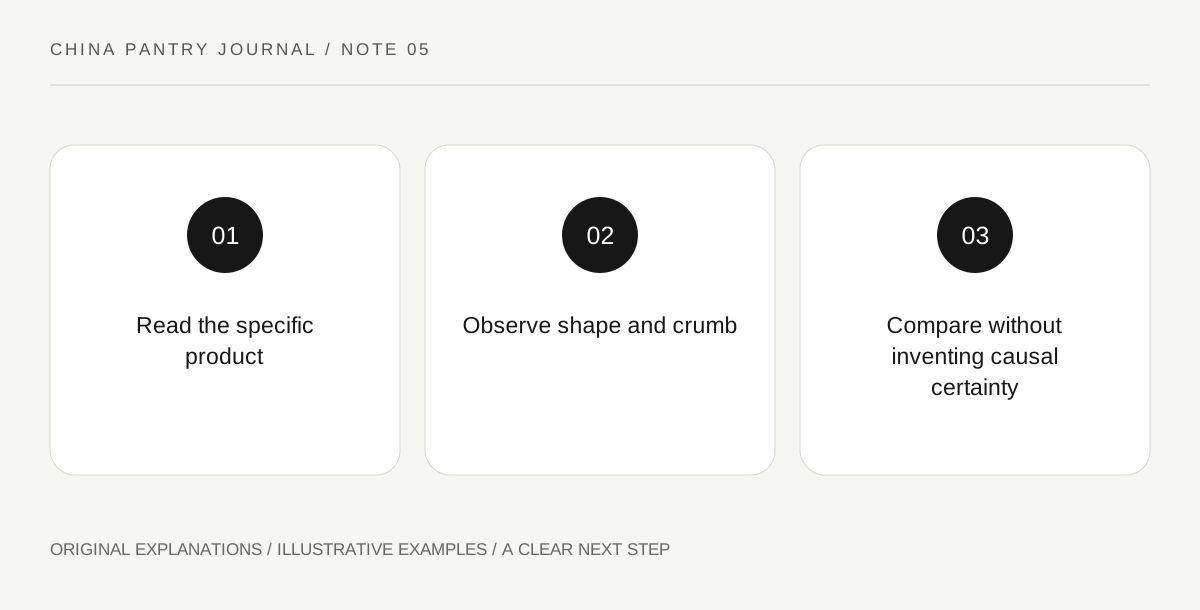
Rice and pastry3 min read
Cake is an exceptionally broad English label. A mung-bean cake can invite a different texture expectation from a baked sponge or a layered celebration cake. Build a small vocabulary around the actual piece: how it holds its shape, how it breaks and how its ingredients are described on the label.
Read the guide ↗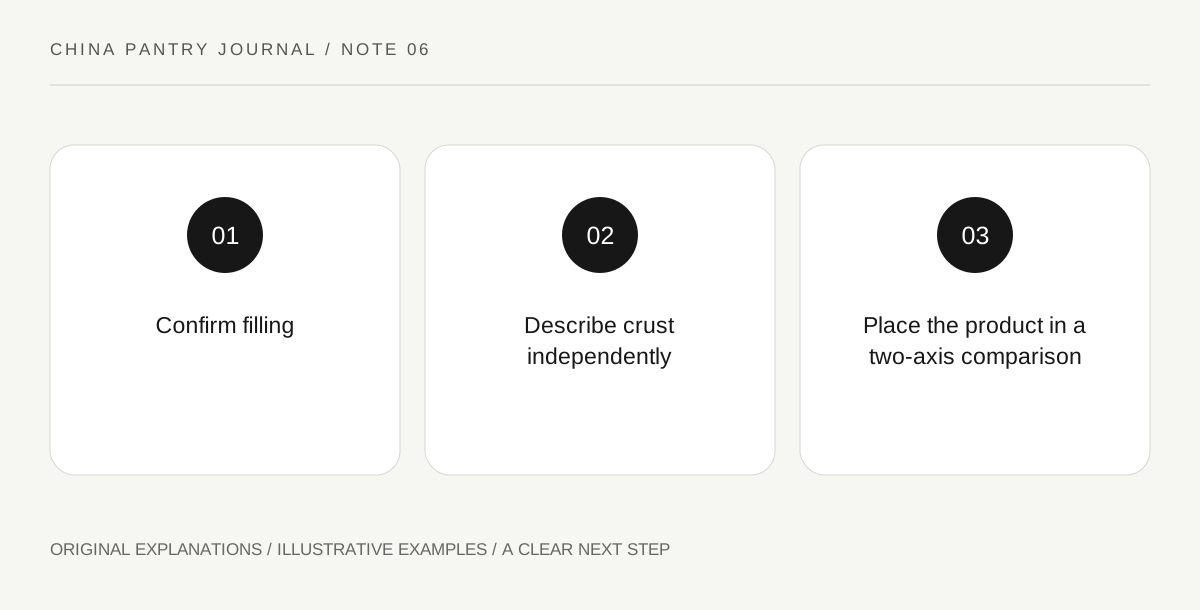
Rice and pastry3 min read
A mooncake does not have to fit the sweet, dense image suggested by a familiar gift box. Savory versions provide a useful way to separate the filling choice from the pastry structure. A two-axis notebook helps you describe the particular product without treating one regional expectation as the definition of the whole category.
Read the guide ↗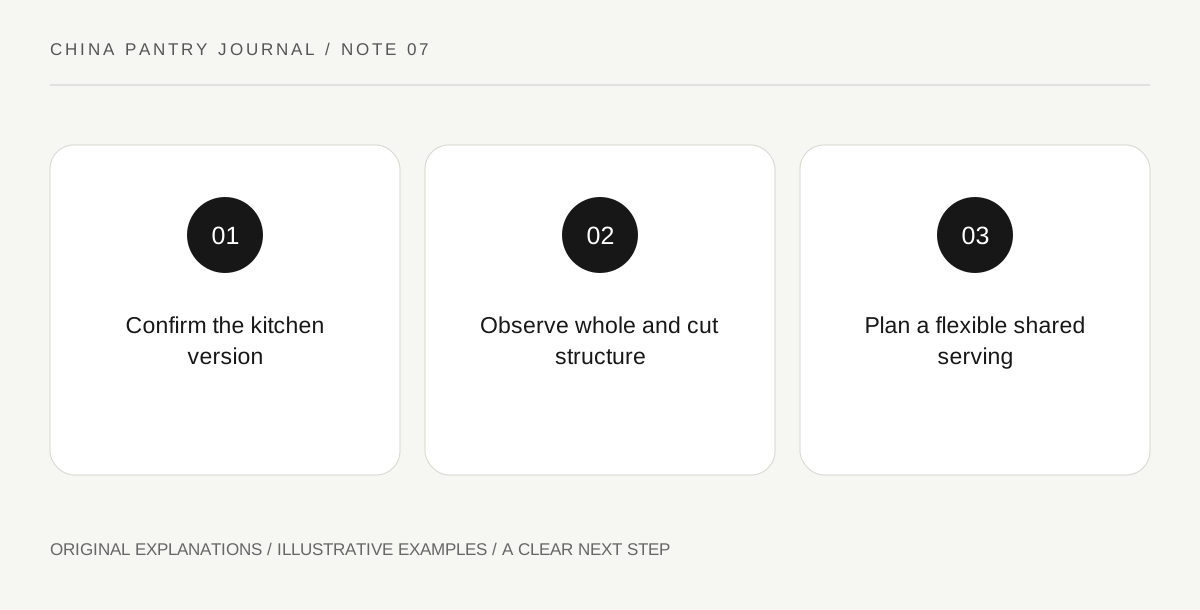
Table methods3 min read
A composed rice dessert at the center of a table asks different serving questions from individually plated cakes. Eight-treasure rice is a useful example: look at the rice body, added ingredients and portioning plan separately. The result is a calmer shared finish in which guests can understand the dish before deciding what they want.
Read the guide ↗
Savory breakfast3 min read
A bowl described as dry can make a soup-noodle eater wonder what is absent. Reganmian becomes more approachable when you focus on what is present: noodles and a coating that joins them into a finished dish. The comparison is about structure and preference, not a contest between wet and dry noodle meals.
Read the guide ↗
Savory breakfast3 min read
A golden square on a breakfast plate can conceal a layered structure that a broad English translation barely explains. Wuhan doupi invites a cross-section approach: identify the outer layer, rice portion and the specific additions described by the shop. A simple drawing makes the dish easier to remember than a borrowed comparison with a sandwich or omelet.
Read the guide ↗
Savory breakfast3 min read
A small fried snack can teach you to notice variation within one piece. With Wuhan mianwo, give the center and outer edge separate attention instead of using one texture word for the entire item. The exercise is simple enough for an ordinary breakfast and precise enough to make a food note worth reading later.
Read the guide ↗
Savory breakfast3 min read
A food cut into strips can resemble noodles without belonging to the noodle category a visitor expects. Hubei bean strips provide a useful vocabulary lesson: shape, material and the finished dish are three separate pieces of information. Asking for all three makes a short menu description far more informative.
Read the guide ↗
Savory breakfast3 min read
A familiar transliteration can conceal a regional difference. Wuhan nuomiji is a useful reminder to identify a food through the local menu and preparation rather than transferring the meaning of a similar-sounding dish encountered elsewhere. A careful name check prevents the first bite from becoming an argument with an expectation the kitchen never promised.
Read the guide ↗
Savory breakfast3 min read
The shape of an open-topped dumpling can suggest a familiar filling before you read the menu. Wuhan shaomai gives you a reason to pause and identify the center. A filling-led comparison reveals why the same broad dumpling category can produce very different eating experiences across regional traditions.
Read the guide ↗
Savory breakfast3 min read
A snack can combine two starch-based components for contrast rather than choosing between them. Wuhan’s glutinous-rice-wrapped fried dough gives that idea a clear physical form. Look at what surrounds what, how the bite changes across the layers and which additions belong to the particular version you buy.
Read the guide ↗
Table methods3 min read
A cooking vessel arriving at the table can make a meal feel self-explanatory, but the service sequence still matters. With claypot rice, clarify what the kitchen has prepared, which additions are optional and how the establishment expects the dish to be served. That short conversation leaves more room to enjoy the contrast within the pot.
Read the guide ↗
Dessert bowls3 min read
A dark, smooth dessert bowl can look unfamiliar when your idea of soup is savory. Black sesame sweet soup offers a chance to separate the serving format from a flavor expectation. Use the spoon to notice consistency, the identified base and any optional additions, while keeping enjoyment independent of a health or authenticity claim.
Read the guide ↗
Dessert bowls3 min read
Two soft-looking elements can play different roles in one bowl. With a sweet tofu pudding, observe the curd and surrounding syrup independently before describing the combined mouthful. The exercise gives a delicate dessert a clearer vocabulary and avoids treating every preparation called tofu pudding as identical across places.
Read the guide ↗
Rice and pastry3 min read
A linked sheet of rounded pockets offers a different eating experience from a flat waffle. Hong Kong egg puffs are a useful subject for looking at structure within a single snack. Compare the rounded part with the narrow connections, and let the actual serving tell you what the contrast feels like.
Read the guide ↗
Dessert bowls3 min read
A colorful dessert bowl can appear to be one blended flavor while containing several distinct kinds of texture. Mango pomelo sago is a useful composition lesson: map the named fruit, surrounding base and small pearl-like elements separately. The grid helps you understand the particular serving without expecting every shop to use the same balance.
Read the guide ↗
Rice and pastry3 min read
A small tart can be remembered entirely through its center while the shell becomes an unnoticed container. Give both components equal attention in a Hong Kong egg-tart comparison. The approach makes a familiar-looking bakery item more informative and prevents a resemblance to another custard pastry from replacing the product’s own identity.
Read the guide ↗