Hubei bean strips: ask what the strip is made from
A food cut into strips can resemble noodles without belonging to the noodle category a visitor expects. Hubei bean strips provide a useful vocabulary lesson: shape, material and the finished dish are three separate pieces of information. Asking for all three makes a short menu description far more informative.
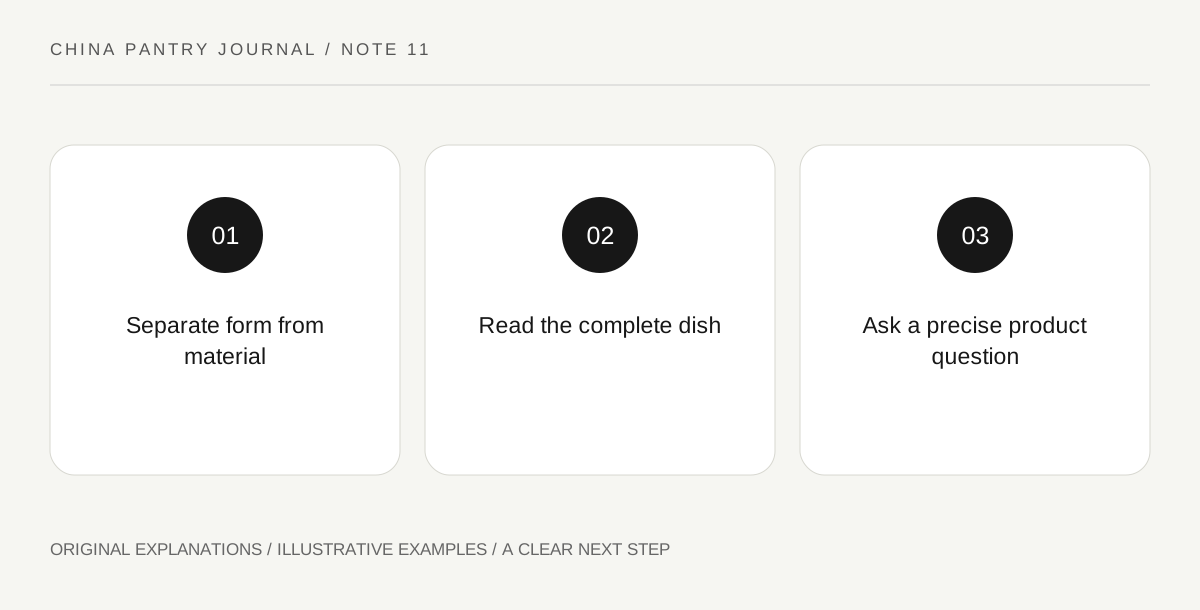
Original explanatory diagram. Read the full method and limitations below.
Let shape remain a description
Wuhan’s official snack guide includes a preparation of bean strips with cured pork. Use the named dish as the reference, then ask the kitchen to explain its particular strip preparation. A long narrow shape is not enough to identify an ingredient as wheat noodle, tofu or another familiar product. Write strip as the shape and leave the material field for confirmed information. This small discipline prevents a translation shortcut from becoming an incorrect claim about what a diner has ordered.
Read the entire dish rather than its first noun
The strip is one component of a finished preparation that may include identified meat, vegetables or seasonings. Keep the actual menu wording and ask which parts are included in the order. A buyer interested in the strip itself should not silently assume the prepared dish is suitable for a particular dietary requirement. Conversely, the presence of a named accompaniment does not establish every ingredient in the strip. A three-column card for form, material and accompaniments keeps those questions visible without turning a casual meal into a technical interrogation.
Observe how the components meet
On a suitable serving, describe how the strips sit with the other elements: separate, interspersed or coated, according to what you actually see. Then choose one contrasting texture supplied by the dish. This is a compositional observation, not a claim that the kitchen always uses a fixed ratio. If the plate arrives differently from a published photograph, ask about the version before deciding it is wrong. Regional dishes can have recognizable names while still varying by establishment and occasion. Your notes should preserve that specificity.
Use the lesson in a pantry conversation
If you later see a packaged ingredient with a similar name, do not assume it is ready to eat or identical to the restaurant preparation. Read its product label, intended use and producer instructions. The dining encounter can give you a useful question for the seller: is this the material used in that kind of dish, and what preparation does this package require? Keep any answer attached to the actual product. Curiosity travels well when it produces a precise question rather than a confident but unsupported substitution.
Illustrative food notebook
Illustrative card: a visitor sees a dish translated as bean strips with cured pork. They write shape in one column, the kitchen’s explanation of the strip material in another, and confirmed accompaniments in a third. Later, at a food shop, the card helps them ask about a packaged ingredient without assuming the package is the finished breakfast or needs no preparation.
Questions that come up
Does the English word bean prove the dish is simply tofu?
No. A translation can be too broad to identify the specific preparation. Ask what the strip is made from and how the kitchen uses it.
Can a similar-looking packaged strip replace it in a recipe?
Similarity of shape is not enough to establish an equivalent ingredient or preparation. Use the product’s identity and instructions, and treat substitutions as a separate cooking decision.
References and scope
These sources support the factual background. Examples and exercises are original illustrative teaching material. References do not imply endorsement.
- Wuhan Municipal Government: Top Ten Wuhan Snacks, bean strips with cured pork entry — The named regional dish pairing bean strips with cured pork; no universal ingredient formula.