Wuhan hot dry noodles: pay attention to the coating, not a missing soup
A bowl described as dry can make a soup-noodle eater wonder what is absent. Reganmian becomes more approachable when you focus on what is present: noodles and a coating that joins them into a finished dish. The comparison is about structure and preference, not a contest between wet and dry noodle meals.
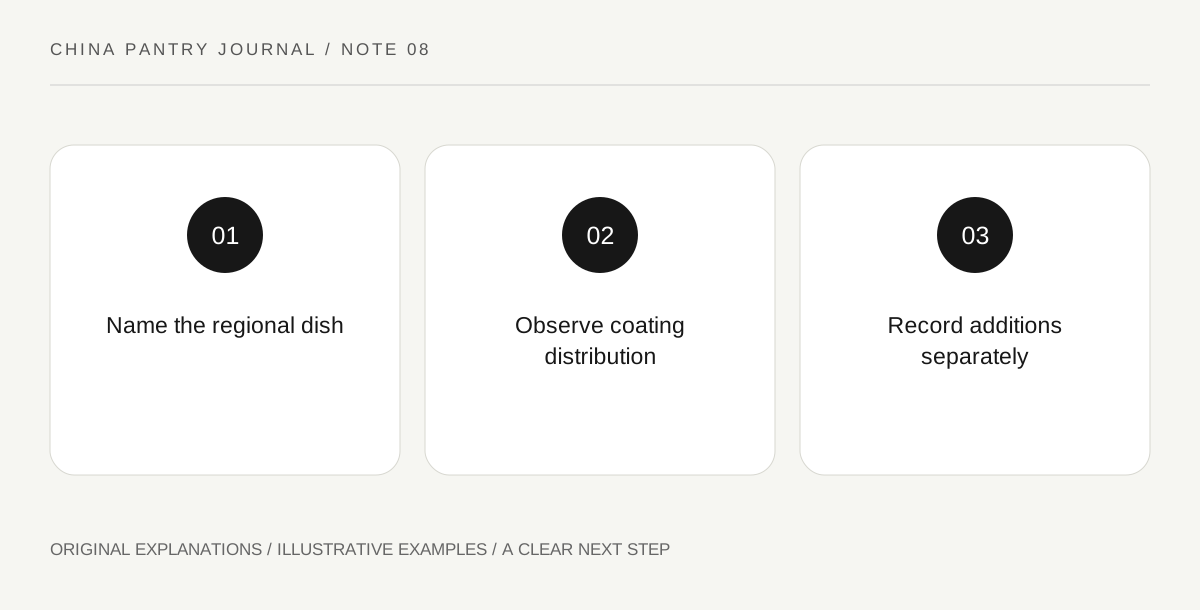
Original explanatory diagram. Read the full method and limitations below.
Start with the regional dish name
Wuhan’s municipal introduction identifies reganmian as hot dry noodles coated in sesame paste. Keep that name beside the English description so dry does not become the only fact you remember. The label distinguishes the dish from a large-broth format, but it does not tell you every seasoning or topping in the specific bowl. Ask the shop for its actual options and communicate any relevant ingredient needs before ordering. A clear named order is easier to repeat than a vague request for the local noodles.
Notice distribution across the bowl
When the bowl is ready to eat as served or as staff directs, look at how the coating is distributed. A small observation about the upper and lower parts of the bowl can help you understand whether mixing is expected. Follow the kitchen’s service explanation instead of imposing an elaborate ritual. If you compare mouthfuls, let the comparison remain comfortable and ordinary. The useful question is how the coating changes your perception of the noodles, not whether you can demonstrate a supposedly perfect mixing technique to everyone at the table.
Separate the base from additions
List the noodle portion, identified coating and optional additions as three fields. This makes later comparison possible without treating a change in topping as a completely different base dish. It also allows companions to choose different additions while discussing the same structural idea. Do not infer ingredients from color or from one online photograph. A dark or reddish addition could have different formulations across kitchens. The seller’s description belongs in the composition field, while your personal impression belongs in a sensory field.
Write a noodle note that can guide a future order
Finish with one sentence about noodle behavior and one about the coating’s effect on the bite. Add the actual version and any optional choices you made. Avoid turning this into a claim that you found the city’s definitive bowl after one breakfast. Your note can still be useful: it tells you which structure you enjoyed and what question to ask next time. A companion who prefers broth may discover that the difference is interesting without needing to declare one format superior.
Illustrative food notebook
Illustrative comparison: two travelers order the same named base dish with different confirmed optional additions. They record coating, noodle behavior and added elements separately. One prefers the simpler order, while the other likes the extra contrast. Their notes agree about the bowl’s structure without pretending that preference is an objective quality score or that either order establishes a universal reganmian recipe.
Questions that come up
Does dry mean uncooked noodles?
The cited municipal description concerns a prepared noodle dish with a coating. Read it as a serving format, not as instructions to eat an uncooked ingredient.
Can I infer every seasoning from the sesame description?
No. Sesame paste identifies an important element in the source’s description, while the complete composition and available additions still require the shop’s information.
References and scope
These sources support the factual background. Examples and exercises are original illustrative teaching material. References do not imply endorsement.
- Wuhan Municipal Government: These noodles are a symbol of Wuhan — The reganmian identity and sesame-paste-coated noodle structure; no restaurant ranking or price promise.