Scallion pancakes: describe the layers without borrowing breakfast expectations
The English word pancake can suggest a soft, sweet stack before the food arrives. Cong you bing invites a different set of questions about surface, interior and scallion aroma. A three-part texture log helps you approach the snack on its own terms and explain it to someone who has not tried that particular version.
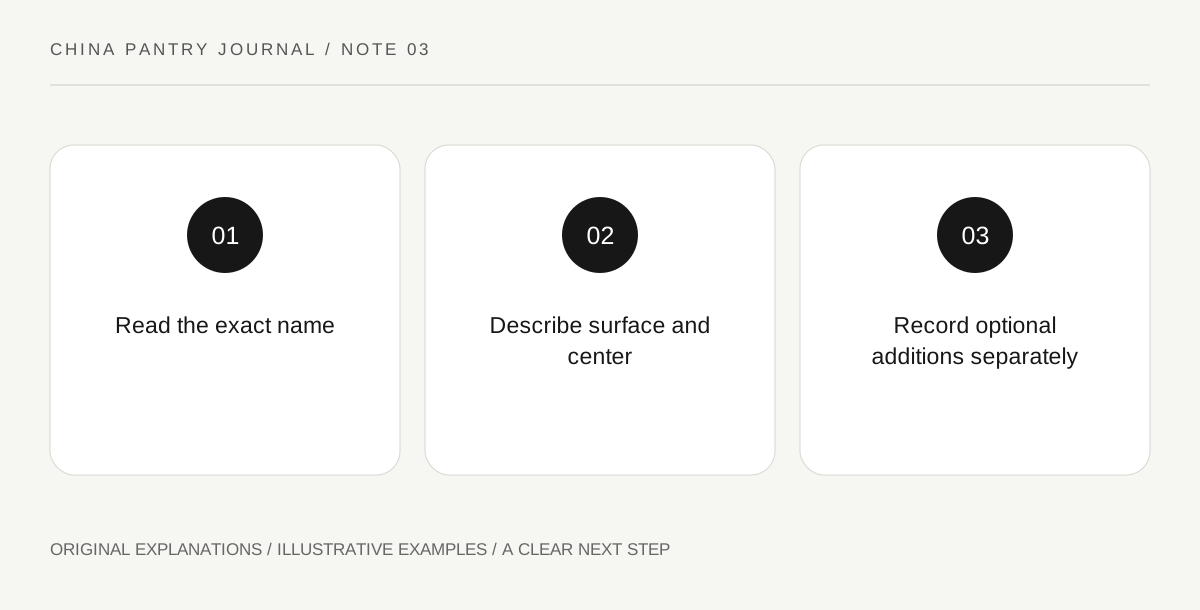
Original explanatory diagram. Read the full method and limitations below.
Keep the Chinese name beside the translation
Shanghai’s official food introduction identifies cong you bing as scallion or green-onion pancakes and highlights their crisp exterior, aroma and layered texture. Keep the name with that broad description rather than replacing it with the nearest familiar breakfast. A translated category can help locate a food on the menu while still carrying misleading expectations. Before ordering, ask how the shop serves its version: an individual piece, a cut portion or part of a set. The name alone does not establish serving size or accompanying items.
Write a surface-to-center description
On a portion you can eat comfortably, observe the outside and then a torn or cut edge. Use words that distinguish resistance at the surface from the interior structure. Avoid deciding that visible color alone proves crispness; the physical experience supplies that information. A useful sentence links the two, such as an outer contrast giving way to a different center, with your actual observations filling the words. This makes the notebook descriptive rather than promotional and lets a companion understand why the texture interested you.
Treat the accompaniment as a separate choice
If the shop offers sauce or another accompaniment, identify it and decide whether you want to compare a little of the pancake with and without it. There is no obligation to perform a tasting ritual or use every condiment. The point is to recognize what belongs to the pancake and what the accompaniment changes. Do not assume that a sauce is included, or that it has the same ingredients at every establishment. A brief question before purchase can prevent an unwanted extra or an inaccurate ingredient assumption.
Write a useful recommendation without claiming a test
A personal note can say that you enjoyed the contrast in a particular purchase on a particular day. It should not become an invented claim that you tested the city’s best pancakes or established a universal ranking. Include the serving form and the feature you liked so the note is useful to another diner. If you are introducing the food at a shared table, describe its role as a savory snack and let guests choose. Familiar language should open the encounter, not pressure everyone to interpret it through one expected breakfast category.
Illustrative food notebook
Illustrative log: a traveler writes the exact dish name, notes that the order is one cut pancake, and creates three fields: outside, interior and aroma. The observations differ rather than repeating “crispy” three times. A sauce is recorded separately because it was optional. The traveler’s message to a friend describes the specific texture contrast and serving format without declaring the snack the definitive version of cong you bing.
Questions that come up
Does pancake mean the dish should be sweet?
The English category is broad and does not establish sweetness. Read the specific food name and the shop’s description rather than importing expectations from another breakfast.
Can a texture note be useful without a numerical score?
Yes. Specific descriptions of surface, layers and serving form often communicate more than a score whose meaning varies from person to person.
References and scope
These sources support the factual background. Examples and exercises are original illustrative teaching material. References do not imply endorsement.
- Shanghai: Scallion Pancakes — The cong you bing name and the broad exterior, aroma and layered-texture description.