Mianwo: compare the center with the outer edge
A small fried snack can teach you to notice variation within one piece. With Wuhan mianwo, give the center and outer edge separate attention instead of using one texture word for the entire item. The exercise is simple enough for an ordinary breakfast and precise enough to make a food note worth reading later.
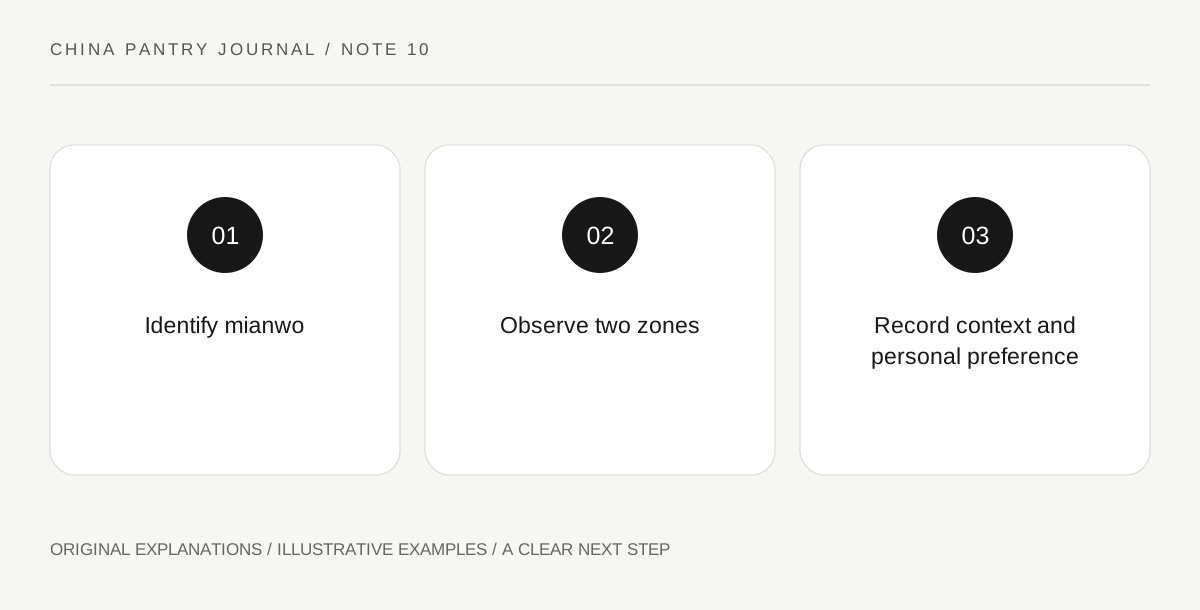
Original explanatory diagram. Read the full method and limitations below.
Begin with the named local preparation
Wuhan’s municipal snack guide identifies mianwo as a rice-based fried snack. Use that identity as context and obtain the shop’s actual ingredient description if needed. A familiar ring-like or indented appearance may suggest another food, but the resemblance is not a recipe. Keep the local name on the page so a visual comparison does not replace it. The first question at the counter is which item is mianwo and how it is sold, not whether it exactly matches a pastry or fritter from another cuisine.
Use a two-zone observation
Divide a simple drawing into outer edge and center. On the actual piece suitable for you, compare how those zones look and behave when a portion is taken. Do not insist on a predetermined answer about which must be crispest or softest. The method should reveal the particular snack you bought, including variation from one part to another. A useful observation can be as modest as discovering that your first mouthful did not represent the entire item. That is enough to improve how you describe food at any market.
Keep context out of the quality score
A snack eaten standing at a busy counter can feel different from the same purchase after it has traveled elsewhere. Record the actual serving context without inventing a controlled test or blaming every difference on one cause. If you compare two purchases, note where and how they were served, as well as the preparation’s name. Your personal preference remains valid, but the notebook should not turn one hurried bite into a universal judgment about a shop or an entire regional food. The more specific the note, the less it needs a grand ranking.
Give the rest of breakfast a different role
If adding another food, choose according to what the group wants from the meal rather than repeating an online must-eat checklist. A different format can make the comparison more interesting, but no pairing is compulsory. Explain mianwo to a companion through its named identity and your two-zone observation. That description lets them form their own expectations without demanding that they experience the exact same texture or level of enjoyment. End with a question for a future visit, such as how another shop presents its version.
Illustrative food notebook
Illustrative note: a traveler draws a circle-like outline with separate center and edge fields. After eating a suitable piece, they discover a contrast they would have missed by writing only “crisp.” The note includes the serving context and exact name. A later purchase is compared on the same two fields, while differences in presentation remain visible rather than being hidden behind an unsupported best-in-city verdict.
Questions that come up
Does resemblance to a doughnut establish its ingredients?
No. Visual shape cannot supply a full formula. Use the shop or label for composition and the local name for identification.
Must a tasting note prove one version is better?
No. A useful note can explain a contrast, preserve a preference or raise a question. Ranking is optional and should not pretend to be an objective test.
References and scope
These sources support the factual background. Examples and exercises are original illustrative teaching material. References do not imply endorsement.
- Wuhan Municipal Government: Top Ten Wuhan Snacks, mianwo entry — The mianwo regional identity as a rice-based fried snack; no fixed shape or recipe claimed.