Wuhan doupi: use a square to understand the layers
A golden square on a breakfast plate can conceal a layered structure that a broad English translation barely explains. Wuhan doupi invites a cross-section approach: identify the outer layer, rice portion and the specific additions described by the shop. A simple drawing makes the dish easier to remember than a borrowed comparison with a sandwich or omelet.
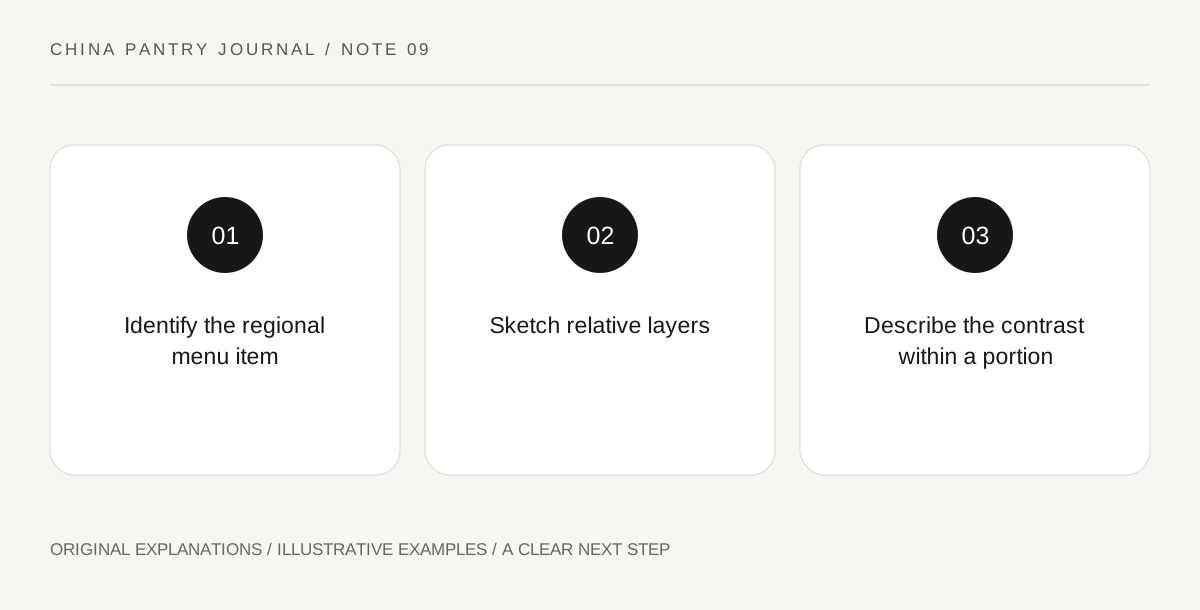
Original explanatory diagram. Read the full method and limitations below.
Use the full regional identification
Wuhan’s official bilingual snack guide identifies sanxian doupi as a layered, square-shaped local breakfast preparation. That is the regional reference for this article. Write Wuhan doupi or the exact Chinese menu name in your notebook so the word is not detached from its context. A short English rendering may emphasize one component and leave the structure unclear. Pointing to the precise menu line lets the seller explain the preparation actually being offered, rather than asking them to guess which food you mean from an approximate translation.
Draw a schematic cut face
When a portion is served, make a small cross-section with separate bands for the elements the shop identifies. Use relative placement rather than invented measurements. The drawing should show how the portion is assembled, not certify its ingredient proportions. If the center is not clearly visible, leave an unknown band and use the seller’s explanation to name it. A schematic is especially helpful when the serving breaks apart, since it preserves the relationship you were trying to understand rather than requiring the food to remain picture-perfect.
Give each layer one descriptive job
Choose a word or phrase for the outer surface, the central body and a confirmed addition. Let your own experience supply those words. The exercise works best when the descriptions are different, because they reveal contrast within one bite. Avoid reducing everything to a single broad adjective such as tasty or rich. Equally, do not assume that the layer you notice first is the only important one. The interplay is the subject, and a companion may focus on a different part while describing the same preparation accurately.
Fit a substantial snack into a varied breakfast
When planning several foods, use this dish’s actual portion as a practical decision rather than assuming every item called a snack is tiny. Start with an amount that suits the group and add another dish only if people want it. A food walk does not need to become a challenge to finish a fixed list. Keep the breakfast note anchored to the portion you bought and the layer relationship you learned. That preserves both hospitality and culinary curiosity without turning appetite into a measure of how seriously you engaged with the city.
Illustrative food notebook
Illustrative page: two companions share a shop-approved portion as part of a larger breakfast. One draws the layered cut face while the other records the exact menu wording. They describe three different texture roles and note that the serving was more substantial than the English word snack had suggested. Their next order responds to appetite, leaving another planned food for a different morning.
Questions that come up
Is a square shape enough to identify doupi?
Shape is a useful clue but not a complete identification. Use the menu name and the shop’s explanation, particularly when several prepared breakfast foods share a display.
Does a layer drawing replace an ingredient question?
No. It clarifies physical structure, while composition comes from product information or the kitchen. A visible band may contain more than one ingredient.
References and scope
These sources support the factual background. Examples and exercises are original illustrative teaching material. References do not imply endorsement.
- Wuhan Municipal Government: Top Ten Wuhan Snacks, sanxian doupi entry — The regional name and layered square breakfast form; article exercises are original.