Claypot rice: ask about the serving sequence before mixing everything
A cooking vessel arriving at the table can make a meal feel self-explanatory, but the service sequence still matters. With claypot rice, clarify what the kitchen has prepared, which additions are optional and how the establishment expects the dish to be served. That short conversation leaves more room to enjoy the contrast within the pot.
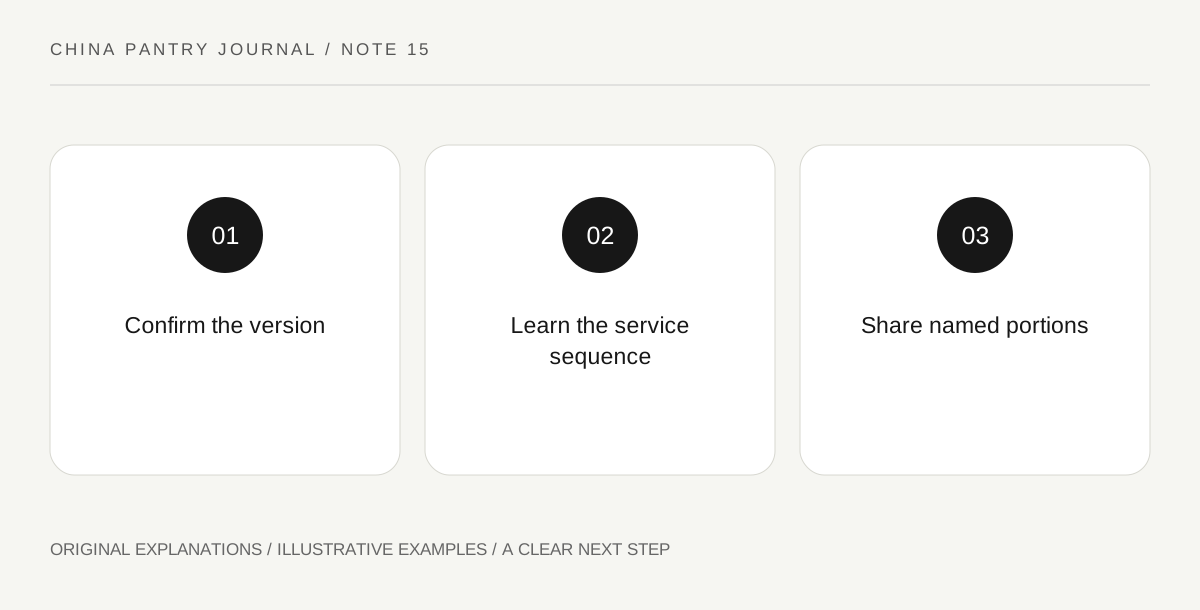
Original explanatory diagram. Read the full method and limitations below.
Separate the vessel from the full order
Hong Kong Tourism Board material presents claypot rice with a variety of toppings. Use that range to ask which specific version is on the menu, rather than ordering the vessel name as though it identifies every ingredient. Clarify the portion and whether the displayed image represents the base order or a particular combination. A clay pot is a presentation and preparation context, not a complete composition label. The exact topping name should remain with the order when several pots arrive for a group.
Ask what happens at the table
Before moving the pot or adding anything, let staff explain its service. A kitchen may have a preferred way to distribute toppings, offer a condiment or serve portions. Follow the instructions for the actual establishment instead of performing a routine copied from an unrelated video. Treat the vessel with the care appropriate to how it is presented and use the provided serving tools. The goal is ordinary clarity: know what is already included, what is added by choice and who will handle any final table step.
Observe different parts without demanding one texture
On your served portion, compare the rice body, identified topping and any contrasting area the kitchen chooses to include. Do not assume that every pot must reveal an identical crust, aroma or degree of firmness. Those expectations may belong to a particular preparation rather than the entire category. A descriptive note is most useful when it names the observed part and the serving context. You can enjoy a contrast without claiming to have tested the equipment, cooking technique or consistency of every future pot.
Coordinate sharing through named portions
If sharing, give the group a simple account of each pot’s confirmed version and let people choose suitable portions. Use separate serving utensils where the establishment provides them, and keep optional condiments identifiable. There is no need to order a fixed number of pots based only on head count; other dishes and appetites matter. End the meal with a note about the chosen topping and the service explanation that helped you. That practical information can guide a future order more reliably than an unsupported declaration that one dramatic table ritual is universally required.
Illustrative food notebook
Illustrative table: three diners order two clearly identified claypot-rice versions alongside another dish. Staff explains how to serve the pots and which condiment is optional. The group keeps the versions named while sharing and records a contrast in the actual portions. No one assumes that a topping visible in a promotional image is automatically included in the other pot.
Questions that come up
Does claypot rice identify one fixed topping?
No. The cited tourism material describes varied versions. The menu’s exact name and kitchen information establish the particular order.
Should every pot be mixed in the same way?
Use the establishment’s directions. A food category does not establish one table procedure for every preparation, vessel or serving style.
References and scope
These sources support the factual background. Examples and exercises are original illustrative teaching material. References do not imply endorsement.
- Hong Kong Tourism Board: Local Cuisine to Try on Temple Street — Claypot rice as a local dining format with varied toppings; no universal crust, timetable or ranking.