Eight-treasure rice: plan the shared dessert around its structure
A composed rice dessert at the center of a table asks different serving questions from individually plated cakes. Eight-treasure rice is a useful example: look at the rice body, added ingredients and portioning plan separately. The result is a calmer shared finish in which guests can understand the dish before deciding what they want.
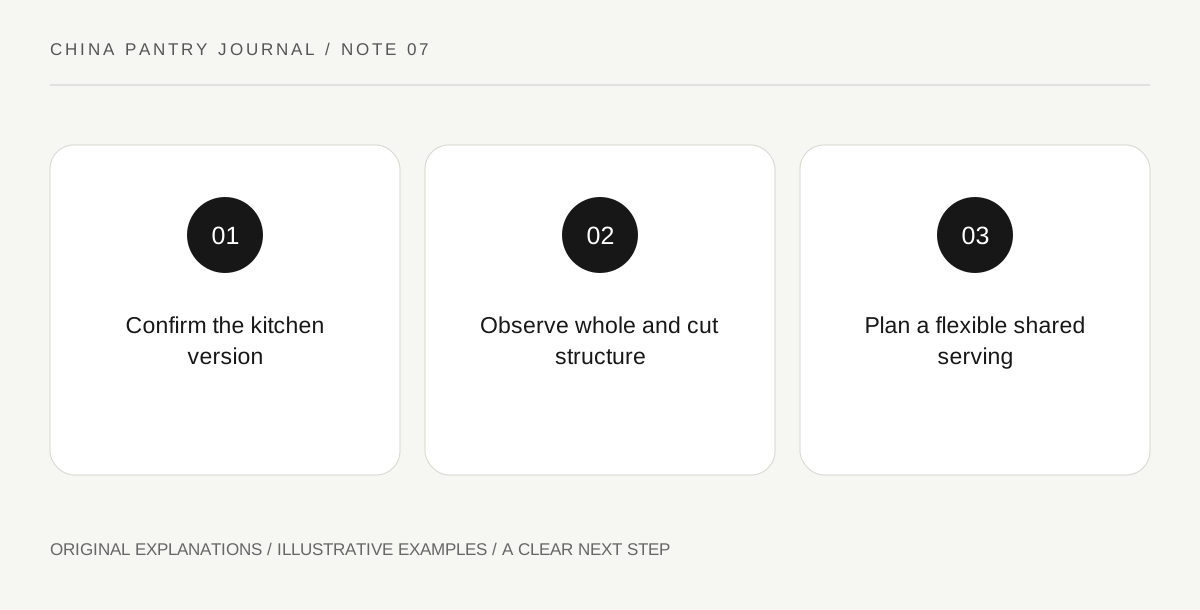
Original explanatory diagram. Read the full method and limitations below.
Recognize a named dish without freezing the ingredient list
Shanghai’s official festive-food account describes eight-treasure rice as a sweet glutinous-rice dish with added ingredients, often presented in a dome form. That is a starting description, not a guarantee that a product contains the same eight items as another. Obtain the kitchen’s actual description and keep it available at the table. A symbolic name should not be used to reconstruct an ingredient list. This is particularly important when visible decorations are easier to recognize than the filling or other elements beneath the surface.
Look from top to cut surface
Before serving, notice the whole presentation and then the structure revealed by a portion. Describe the relationship between rice body, visible additions and any center identified by the kitchen. Do not move decorations solely to make a better photograph if the group is ready to eat. A quick contextual record is enough. The cut surface may answer some structural questions while leaving others unresolved, so preserve the kitchen description alongside the observation instead of expecting the slice to disclose the complete recipe.
Arrange a comfortable first serving
At a gathering, ask whether guests want an initial portion and leave room for different appetites after the meal. Use the utensils provided or suitable serving utensils and let the host manage the shared dish rather than requiring everyone to reach into the center. There is no universal portion size supplied by the word dessert. The useful planning question is how this dish fits with the rest of your menu and the preferences of the people present. A flexible first serving keeps a celebratory presentation from becoming a pressure to finish a prescribed amount.
Explain the festive connection in a sentence
A brief note about the dish’s place in a Shanghai festive table can enrich the experience. Do not make every family follow one compulsory meaning or assume that the dish is eaten only on a holiday. Keep your explanation tied to the source’s described context and allow guests to discuss their own associations. Your final notebook entry should include the exact kitchen version, its structural features and what worked about serving it together. Those details make the experience repeatable without pretending that a single dinner defines a whole culinary tradition.
Illustrative food notebook
Illustrative dinner: a host chooses one labeled eight-treasure rice dessert after confirming the kitchen’s ingredients. Guests are asked whether they want a small first portion, with more available later. The host records the whole presentation and one cut surface, then notes how the shared format affected serving. The cultural introduction remains one short sentence, leaving the meal itself to the people around the table.
Questions that come up
Does eight treasures guarantee one fixed set of ingredients?
The name does not supply a complete product-specific list. Use the producer or kitchen’s information for the version you are serving.
Must it appear only at a Lunar New Year meal?
The cited account explains a festive association. It does not establish a restriction on every family, restaurant or other occasion.
References and scope
These sources support the factual background. Examples and exercises are original illustrative teaching material. References do not imply endorsement.
- Shanghai: A taste of Shanghai — traditional New Year foods and their hidden meanings — Eight-treasure rice’s sweet glutinous-rice structure, example presentation and festive-table association.