Tofu pudding: notice the boundary between curd and syrup
Two soft-looking elements can play different roles in one bowl. With a sweet tofu pudding, observe the curd and surrounding syrup independently before describing the combined mouthful. The exercise gives a delicate dessert a clearer vocabulary and avoids treating every preparation called tofu pudding as identical across places.
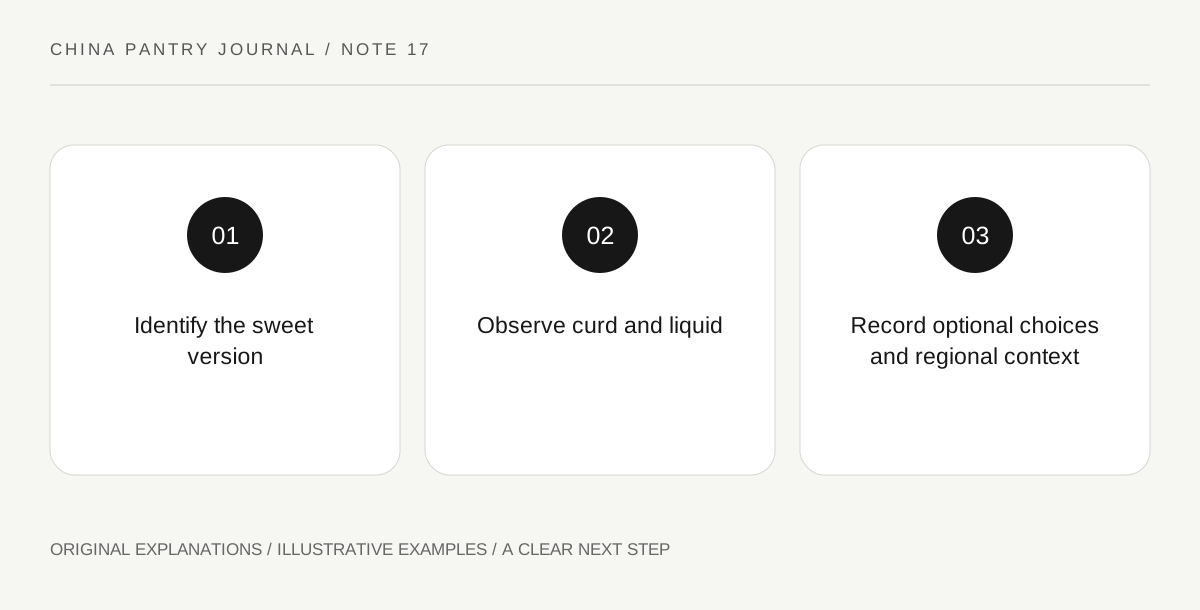
Original explanatory diagram. Read the full method and limitations below.
Specify the sweet serving under discussion
Hong Kong Tourism Board’s dessert introduction describes tofu pudding with clear syrup and sweetened ginger. This article concerns that kind of sweet serving, not every regional dish translated as tofu pudding. Keep the exact menu name and kitchen description together. A broad ingredient name can appear in very different culinary contexts, so identify the actual bowl before borrowing expectations from another city or a savory preparation. The regional and serving qualifiers are practical information, not unnecessary complications.
Observe two components before combining them
Look at the shape and surface of the curd and at the liquid around it. On a suitable spoonful, describe how they meet. You do not need to separate the dessert into a laboratory exercise; one ordinary bite can supply a useful observation. The purpose is to avoid using sweetness as the only description of both elements. A note about the curd’s behavior and a separate note about the surrounding liquid can explain why two visually pale servings might still feel different to a diner.
Let the kitchen explain adjustment options
If the establishment offers syrup or another addition separately, ask how the serving is intended to work and choose according to preference. Do not assume that every kitchen can or should prepare a customized version from an online suggestion. When sharing descriptions with companions, distinguish the base bowl from optional choices you made. This keeps your personal serving from becoming a misleading instruction for someone who orders the named item elsewhere. A small menu note can preserve that difference without making the conversation burdensome.
Compare names across regions carefully
A future encounter with a similarly translated dish may involve another seasoning, structure or place in the meal. Give it its own entry and compare the actual preparations. Avoid declaring one a dessert and therefore every other version a mistake. Translation often gathers several local foods into an English phrase that is broader than any single example. Finish your note with a precise descriptor such as sweet serving with the kitchen’s stated syrup, then add your own observation. That combination makes the memory portable without erasing regional variety.
Illustrative food notebook
Illustrative notebook: a traveler writes the exact sweet tofu-pudding order and notes the kitchen’s syrup description. One field concerns the curd and another the liquid. Later, a savory dish with a similar English name receives a separate page, with region and serving role attached. The comparison teaches the traveler to ask a better identification question rather than assuming the two bowls must taste alike.
Questions that come up
Does tofu pudding always mean a sweet dessert?
The English phrase can be broad. This guide discusses a sweet serving documented by Hong Kong Tourism Board; identify other local preparations separately.
Can I infer the liquid’s complete formula from its clarity?
No. A visual characteristic does not supply a recipe. Use the kitchen’s information for composition and your own senses for a modest description of the serving.
References and scope
These sources support the factual background. Examples and exercises are original illustrative teaching material. References do not imply endorsement.
- Hong Kong Tourism Board: 6 Must-Try Traditional Hong Kong Desserts — One documented sweet tofu-pudding serving with syrup and ginger; not a definition of all regional tofu preparations.