Wuhan nuomiji: do a regional name check before expecting chicken
A familiar transliteration can conceal a regional difference. Wuhan nuomiji is a useful reminder to identify a food through the local menu and preparation rather than transferring the meaning of a similar-sounding dish encountered elsewhere. A careful name check prevents the first bite from becoming an argument with an expectation the kitchen never promised.
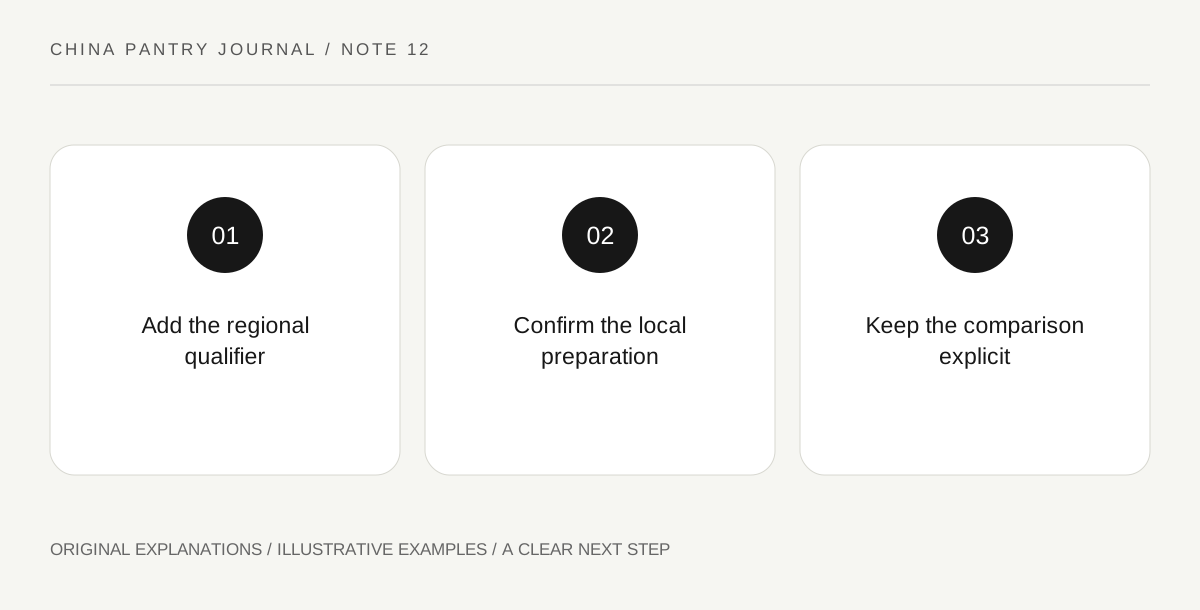
Original explanatory diagram. Read the full method and limitations below.
Put the city beside the name
Wuhan’s municipal guide presents its nuomiji as a fried glutinous-rice snack, explaining the chicken-related name through its appearance. Keep Wuhan attached to that identification. A similar transliteration used for a different regional food should not silently replace it in your mind. When ordering, point to the actual item and ask for the shop’s description rather than relying on a phonetic memory alone. The regional qualifier is not decorative: it tells you which culinary context is supplying the name you are trying to understand.
Ask about composition without reasoning from the metaphor
A name explained through resemblance does not provide a complete ingredient list. Ask what the particular product contains, especially if a named animal leads you to assume either its presence or absence. Do not reverse the explanation into a universal promise about every kitchen. A small card can have two lines: why the name is used in this source, and what this seller says is in this version. Those lines answer different questions and can remain accurate even if the recipe differs from one shop to another.
Describe an outside-to-inside change
On a suitable portion, observe the exterior and the rice-based interior separately. Explain how the contrast unfolds rather than borrowing a description from a leaf-wrapped rice parcel or another unrelated preparation. If a filling or addition is identified by the shop, name it; otherwise, keep the observation descriptive. The result may change your sense of the dish’s role in breakfast. A food called a snack can still feel substantial, so let the actual portion and your appetite determine what else belongs in the meal.
Write a comparison that preserves both foods
If you know another similarly named preparation, compare them by region, serving form and confirmed composition. Do not declare one the correct version and the other a misuse of the word merely because it came second in your experience. Food language carries local histories and practical conventions. Your notebook can hold two entries with similar sounds and different structures. That is a more useful outcome than forcing the new encounter into a category already occupied by something else. It also equips you to ask clearer questions on a future trip.
Illustrative food notebook
Illustrative name check: a traveler recognizes the sound nuomiji and expects a leaf-wrapped preparation. At a Wuhan counter, they confirm that the displayed item is the local fried rice-based snack. They revise the expectation, ask for the actual composition and create a separate regional entry. The comparison then becomes an example of culinary language variation rather than a complaint that the shop served the wrong food.
Questions that come up
Does the name by itself prove chicken is an ingredient?
No. The cited Wuhan explanation relates the name to appearance. The particular product’s composition still needs the seller’s information.
Is one regional meaning the only valid one?
This guide does not establish a universal naming authority. Use location and preparation to distinguish the foods instead of treating your first encounter as the definition for every region.
References and scope
These sources support the factual background. Examples and exercises are original illustrative teaching material. References do not imply endorsement.
- Wuhan Municipal Government: Top Ten Wuhan Snacks, nuomiji entry — The Wuhan fried glutinous-rice snack identity and appearance-based explanation of its name.