Rice-wrapped fried dough: understand two staples in one parcel
A snack can combine two starch-based components for contrast rather than choosing between them. Wuhan’s glutinous-rice-wrapped fried dough gives that idea a clear physical form. Look at what surrounds what, how the bite changes across the layers and which additions belong to the particular version you buy.
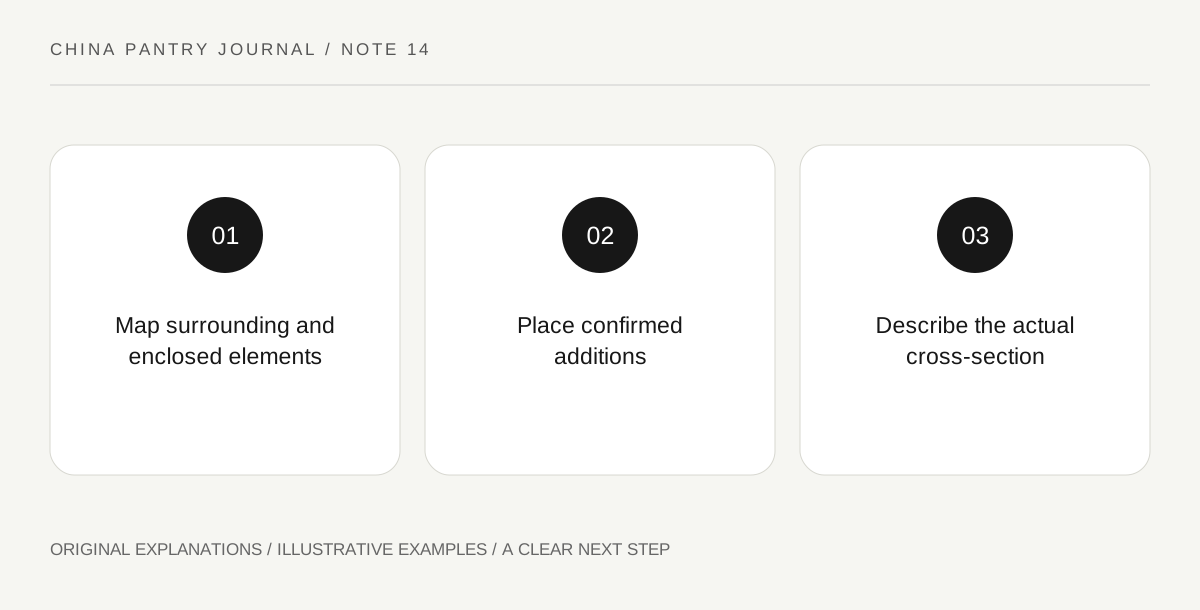
Original explanatory diagram. Read the full method and limitations below.
Read the architecture before borrowing an analogy
Wuhan’s municipal guide identifies a preparation in which glutinous rice surrounds a fried dough stick. Use that relationship as the core description. A borrowed label such as sandwich or rice roll may help a conversation but can also suggest the wrong arrangement. Draw two nested shapes and name the surrounding and enclosed components. This simple diagram explains the food more directly than searching for an exact equivalent from another cuisine. It also gives you a stable reference when the finished parcel is partly concealed by its takeaway wrapper.
Ask where optional additions sit
The actual shop may describe a particular sweet or savory version and additions. Record those details rather than inferring them from the two main components. Ask whether an addition is mixed into the rice, placed beside the inner element or served separately if that distinction helps you choose. The question is about the offered product, not a demand for the kitchen to make an unfamiliar customization. A clear description lets companions select what suits them and avoids treating a plain-looking exterior as a complete ingredient declaration.
Compare the first bite with the cross-section
On a suitable serving, notice how much of each component appears in the first bite and then look at the revealed section. The two impressions may differ because the initial edge does not represent the middle. Describe the relationship without claiming exact ratios. If the food shifts or breaks as you eat, that is part of the serving experience rather than a failure of your diagram. A useful notebook records what the structure helps you understand, while letting the snack remain something to enjoy rather than an object that must stay intact for documentation.
Use the contrast to plan a varied meal
When building a breakfast, consider this as one combined preparation. Do not count the two main components as though they were automatically two full separate orders. Let actual serving size, hunger and the rest of the table guide the next choice. The most interesting comparison may be with a food offering a different format, but you need not create a compulsory pairing. Finish with one sentence about how the surrounding and enclosed elements worked together in your particular purchase. That is the practical insight the structural exercise was designed to reveal.
Illustrative food notebook
Illustrative diagram: a traveler draws a rice envelope around a central fried-dough shape and adds the shop’s confirmed optional ingredients in their actual positions. The first bite reveals more rice than the middle section, so the note avoids a fixed proportion claim. At breakfast, the traveler treats the parcel as one substantial choice and lets appetite decide whether another dish is wanted.
Questions that come up
Are rice and fried dough competing alternatives here?
The identified preparation combines them. Understanding their relationship explains the dish more clearly than assuming every meal must choose only one staple format.
Does the first bite reveal a fixed recipe ratio?
No. A bite is a small sample from a particular portion. Describe its experience without turning it into a precise formulation for the category.
References and scope
These sources support the factual background. Examples and exercises are original illustrative teaching material. References do not imply endorsement.
- Wuhan Municipal Government: Top Ten Wuhan Snacks, rice-wrapped fried dough entry — The relationship of glutinous rice surrounding fried dough; notebook exercises and examples are original.